The most common issues that this function identifies are:
- Power circuit failure, such as a failed fuse or power converter chipset
- Motor seizure or heads sticking to disk platters, for example, a mechanical issue preventing the drive from spinning up
The function also identifies some other failures, such as a failed motor controller chipset or a failed CPU. However, identifying these failures may require some expertise. You must compare graphs taken from a failed drive with graphs from a good drive of the same family, because the lower level diagnostic is drive-specific.
In general, taking into account the fact that most 3.5” drives consume 5V for CPU and voice coil actuator operation and 12V for motor-related circuitries, it is possible to identify an area of the drive where the problem lies. Since all 2.5” drives consume 5V only, their diagnostic is a bit less functional; however, common issues such as the two failures mentioned above are still easily identified.
Here are some examples of Current Monitoring Package graphs taken from various drives:
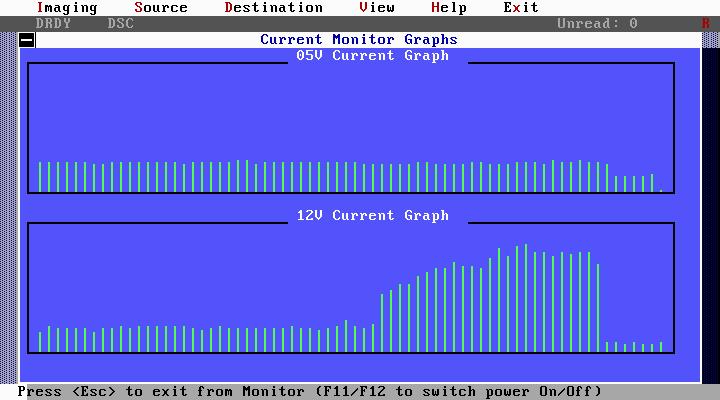 Spin-up graph of a good 3.5” drive
Note: Motor spin-up current on 12V and CPU processing on 5V.
Spin-up graph of a good 3.5” drive
Note: Motor spin-up current on 12V and CPU processing on 5V.
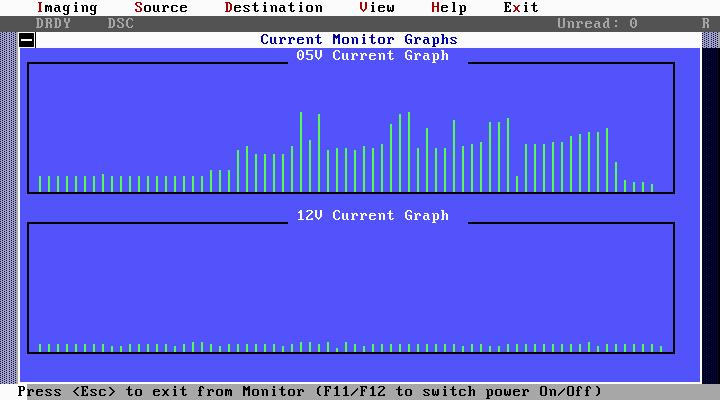 Spin-up graph of a good 2.5” drive
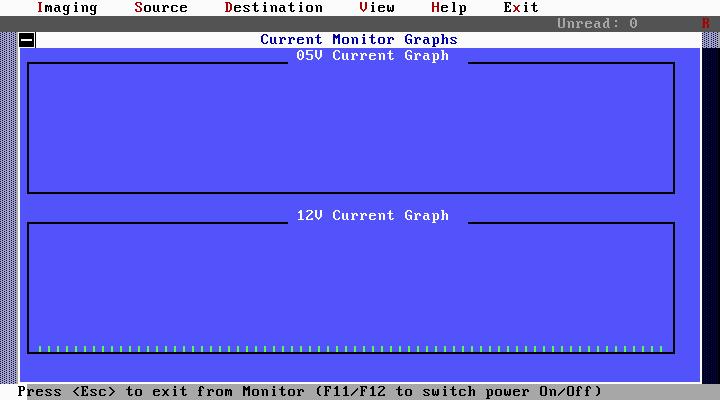 Power circuitry failure, e.g. a burned fuse
Note: Drive doesn’t spin. No power consumption on 5V and only noise on 12V.
Power circuitry failure, e.g. a burned fuse
Note: Drive doesn’t spin. No power consumption on 5V and only noise on 12V.
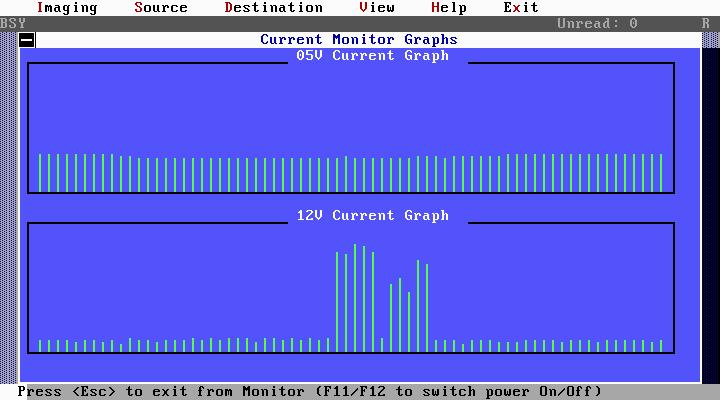 Mechanical issue, such as a motor seizure or heads sticking to disk platters
Note: Drive doesn’t spin. It is trying to spin-up (12V pulses),
but has some mechanical issues.
Mechanical issue, such as a motor seizure or heads sticking to disk platters
Note: Drive doesn’t spin. It is trying to spin-up (12V pulses),
but has some mechanical issues.
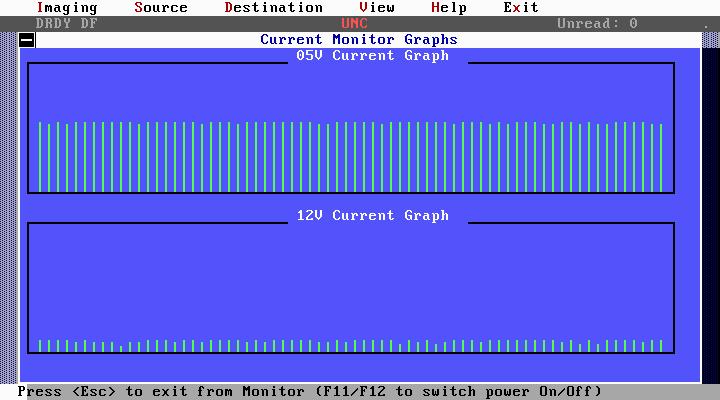 Motor controller failure
Note: CPU consumes too much power on 5V (possibly due to intensive exception
processing) and motor controller consumes no power at all (only noise).
Motor controller failure
Note: CPU consumes too much power on 5V (possibly due to intensive exception
processing) and motor controller consumes no power at all (only noise).
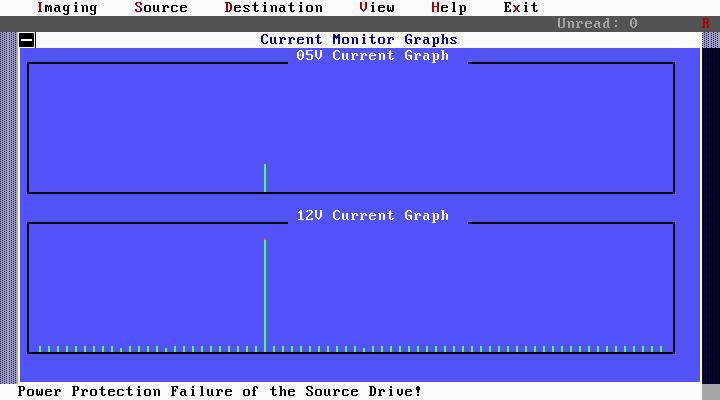 Motor windings failure or a motor controller short
Note: Power circuitry short on 12V.
Motor windings failure or a motor controller short
Note: Power circuitry short on 12V.